They get caught inside intricate devices like control valves and pressure regulators.
Boiler water hardness is increased by.
They accomplish this by locking metals into a soluble organic ring structure.
If you use a boiler to heat your home throughout the most bitterly cold time of the year then you don t need us to tell you just how successful an endeavor this can be.
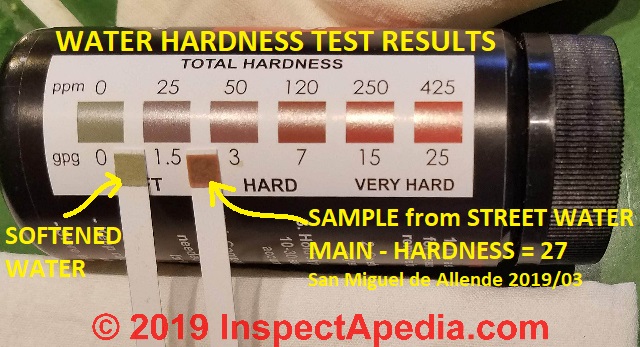
Today we are looking at how to conduct a water hardness test to check the water going to the boiler.
Untreated water even water coming from a municipal water utility can contain dissolved salts which form scale on the heat transfer surfaces as the water is heated.
It carries impurities such as dissolved solids with it.
Hard water going into a steam boiler can lead to increased scaling and deposit build ups.
Contamination of the surfaces of control valves this will affect their operation and reduce their capacity.
This may lead to problems elsewhere in the steam system such as.
The chloride test is used often in conjunction with the conductivity test to regulate boiler blowdown.
These result from the precipitation in the boiler of feedwater hardness constituents due to heat and interaction of treatment chemicals and from corrosion products in the feedwater.
Total alkalinity ppm as caco 3.
The main disadvantage of this deposited.
The chelated cations do not deposit in the boiler.
How many times the mineral content which stays in the boiler when steam is produced of the raw water has been concentrated or built up in the boiler.
This causes a lot of damage and increased maintenance.
Leading to increased carryover.
Therefore chlorides are used as a measure of boiler water concentrations i e.
Carry over is boiler water that leaves the boiler in the steam but is still water.
Silica ppm sio 2 lt.
Chelants have the ability to complex many cations hardness and heavy metals under boiler water conditions.